June 15, 2010
okay, seriously the funniest thing I've seen this year
March 10, 2010
What I've been working on
instead of writing blog entries. Here's a short piece, a first draft just finished today...
February 9, 2010
superhero
If I could draw, I'd make a superhero whose special power was super nunchi. He'd sit at the table, say between Israel and Palestine, and use his super nunchi to understand where each side was coming from, what each side wanted. He'd use his super empathy, so each side knew felt what they felt, and they'd both feel heard. Then he'd weigh the balance with his special sense of Korean justice, balancing the needs among the group over his own self-interest and create a story where both sides could see themselves in it. Might would be an option still because Koreans are practical. They've had to be.
At the of the day he'd withdraw into the shadows, and drink. Probably too much. Super nunchi wears on you but he'll fight as hard as he can not to give in - to black nunchi. These would be the local villains who try to destroy our superhero... An ancient halmoni made of flames, consumed by her anger. A villain in a suit, the dark king of his home, ruling with his fists. The perpetually lost, teenagers who can never find their way, who cause suffering to all those who come near. Black nunchi is the worst in those who know exactly what their power is worth, and use it for their own gain.
February 2, 2010
Lame!
Argh. I've been wanting to write the perfect entry about my lameness at keeping up this blog but the being lame part still gets in the way. Part of it is my inability to find balance in my life, how to carve up the twenty four hours between two kids, a husband, and myself, plus basic home keeping (which I am proud to report my husband does at least half of and still it is such a struggle!), plus writing, my web business, and then having quality family time and husband/wife time! Does anybody have any tips? Maybe if we pool our hard earned lessons then it will amount to something! I would love to hear.
I am still working on my longer writing projects though, with progress. Last year I took a serious turn into non-fiction and it was greatly humbling to my fiction-lauding, high minded self. These are some hard to hone skills. But I have inspiration, works I keep by my desk and in case anyone is curious or maybe has these same books - they are Joan Didion's We Tell Ourselves Stories in Order to Live (the entirety of her writing!), Jo Ann Beard's The Boys of My Youth, Junot Diaz' Drown, and Jhumpa Lahiri's Interpreter of Maladies.
If you'll notice, two are non-fiction and two are fiction. This is because I am most interested in the area of writing where these two overlap - both Joan Didion and Jo Ann Beard use fiction techniques to write non-fiction, where Junot Diaz and Jumpha Lahiri write fiction which can only be read as truer than life. Also, Diaz and Lahiri write ethnic stories but have managed to escape the clutches of the ethnic sub-sections of the bookstore. A topic I am most interested in - when Asian-American lit. or other 'ethnic' lit. is/or becomes American Literature. One I believe creates an experience that only similar-cultured folks can relate to while the other creates a universal experience. How do they do that? This is what I think about when not writing.
Anyway I am so glad at least some of you forgot to take me off your RSS feed. The comments make the writing-about-very-specific-things-in-the-Internet-void feel like discourse, and it gives me a nudge when things get slow.
January 21, 2010
John Yoo
| The Daily Show With Jon Stewart | Mon - Thurs 11p / 10c | |||
| Daily Show: Exclusive - John Yoo Extended Interview Pt. 1 | ||||
| ||||
I've always been deeply troubled by what I call the North Korean aspect of our culture. It's the part of being Korean that lends itself toward extremism, authoritarianism and to some degree, self nihilism. Think: Korean student suicide, Self-Immolation -perhaps most famously demonstrated by the soccer fan who set himself on fire on international TV. So when I heard years ago John Yoo, the lawyer who essentially authorized 'torture' under the Bush administration, I was not at all surprised he was a member from my home church in Philadelphia, Young-Sang Presbyterian.
Our church, like most Korean churches, is conservative - in large part because conservative evangelicalism coincides exactly with Confucian and Authoritarian mores. Obey your parents? Of course. Obey God without question? Of course. And who will tell you what God wants you to do? The Pastor. Treat the Pastor like a mini-pope even though it's not part of the Protestant movement? Yes! And so forth.
Still I expected to hate John Yoo when he came on the Jon Stewart show to promote his book. It was clear to me Jon Stewart felt even more so. But I think we were all surprised to find John Yoo was not this self-satisfied, smug right winger but he was sincere, and vulnerable, and seems genuinely and constantly surprised at the level of anger directed toward him. And it hit me while watching him, that he was this smart, driven kid - the pride and joy of his parents and community - who did what he was told, just as he had been raised. I think on some base level, he believes he was serving God.
This was the kind of thing that left the deepest marks on me. We were founding members of Young-Sang, now one of the largest Korean churches in the States, and to some degree it has become a kind of ghost following me around, because where I am from will always affect me - even when I actively choose different things. It also marks me as being unable to left-wing knee jerk against conservatives or the religious left. In Brooklyn, in New York, I can't think of a less popular, less understood thing that to say you are Christian, or go to a traditional church. And even I have a certain impatience with young evangelicals, especially when I see they what they are up against - a kind of naive, extreme faith that they use to create certainty in their lives. And for which they pay heavily. But still, I have this deep empathy and love for Korean churches, for Korean parents, for this next generation that have created a kind of American-Korean 2.0 version of the church they grew up in - it has it's place.
January 17, 2010
My grandparents have seven kids. And those seven kids got married and had at least two of their own kids - more or less in the same order as they were born. Eldest aunt had a kid first. Second Aunt had her kid, roughly the same difference in years between her and her older sister. I was third. Because mom is the third eldest Aunt. And so forth with some blurring among the younger kids but in good Confucian style, we knew our places not only in our own families, but in the greater family when at holidays my grandmother and grandfather were the head of the table.
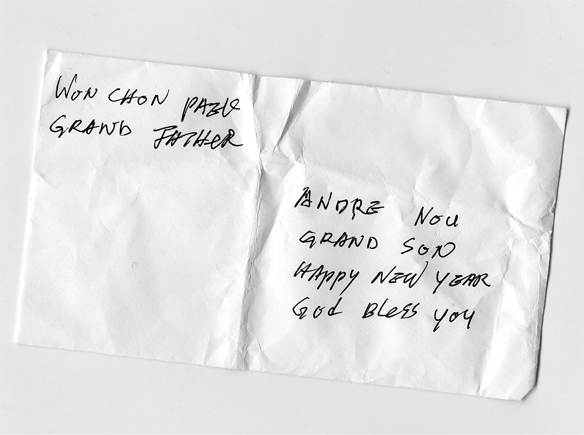
For as long as I can remember our family has gathered at New Year’s and one of the cousins’ favorite things – besides the games, the karoake, and the adults urging college aged children to perform and sing songs, the feasting, and the jjul (bowing)- was receiving our sebeh envelopes from each Aunt & Uncle pair, flanked on both sides of my Grandparents, and reading what they’d written. They almost always attempted to write our names, mostly because they gave us money according to our age and didn’t want to mix it up. It irked my sister for years that she received half of what I did even when she graduated college.
Grandpa wrote the best envelopes. Over the years my sister Becky received envelopes that said, “Beggy,” “Libekah,” and once she was given an envelope that said, “Rebekah” but then our cousin Erica, who is the second eldest in her family but in reality closer to my age then my sister, got an envelope that said, “Bekki.” (Actually I want to say this often happened to my cousin who’d have a small identity crisis each time)
Throw in some great grand children, and I imagine my grandfather now spends a good hour before New Year’s, painstakingly writing out names on the envelopes. More than a few bear his earlier efforts, guesses would simply have a line penciled through, and it wasn’t unusual to have two or three different spellings or entirely different names crossed out on your envelope before he settled on one.
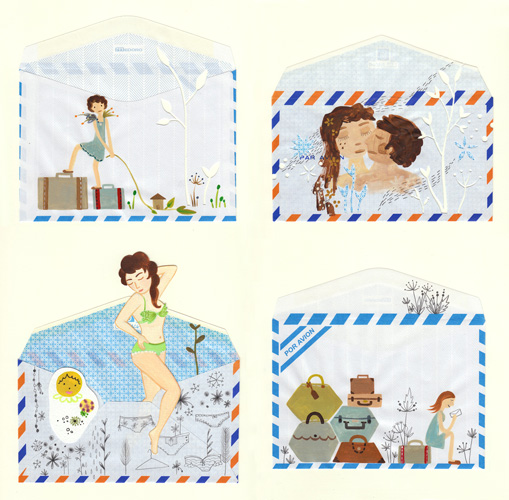
When I married a “Raul”, and resisted my mother’s best efforts to rename him from the Bible (How about Peter? Or John? John is best name!), my entire family came to believe his name was really Lau, and spelled it that way because that’s how they pronounced it. So when it came to my own kids I had little expectation that anyone would know how to spell their names, especially the eldest, Raul Andres. I was particularly charmed though by this year’s envelope from Grandpa, the sweet note, how he formatted it as though he were mailing it, and the mysterious Nou following Andre. I’ve no idea what I’m going to do with all these envelopes I’ve saved over the years ... but each one causes a funny little pang in my heart, and one day I’m sure to weep over them.
January 17, 2010
2010
July 15, 2009
My idea of 1000 words

Only at New York Hot Dog & Coffee at Leroy and Bleeker. See the brief article here...
July 4, 2009
In Spain ...
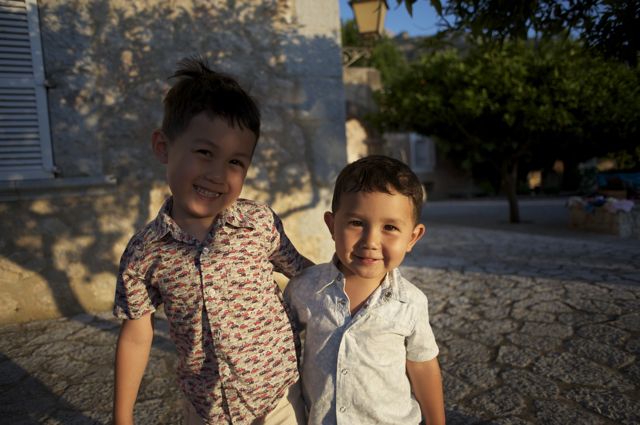
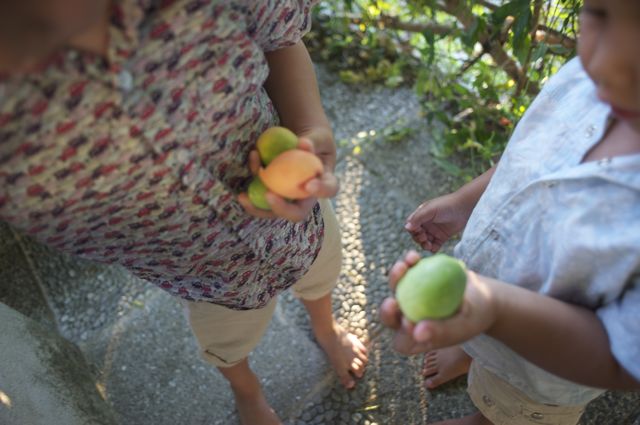
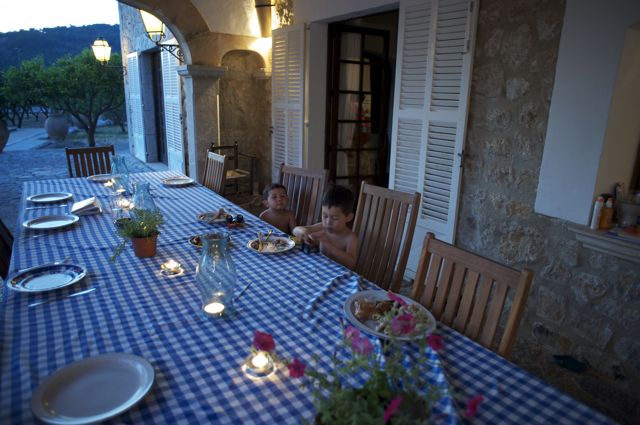
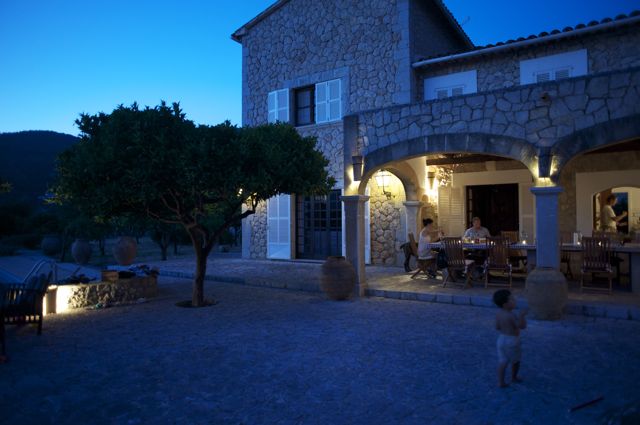
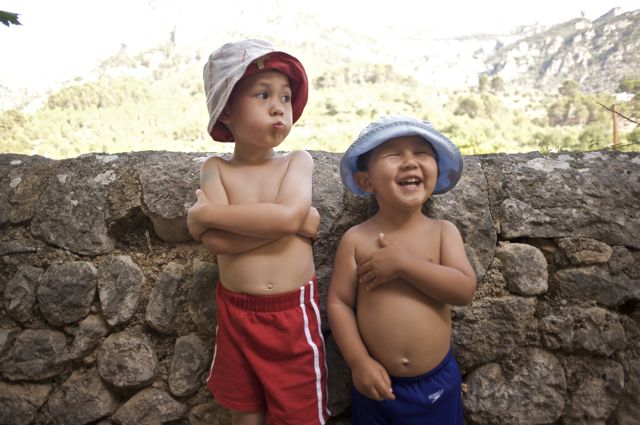
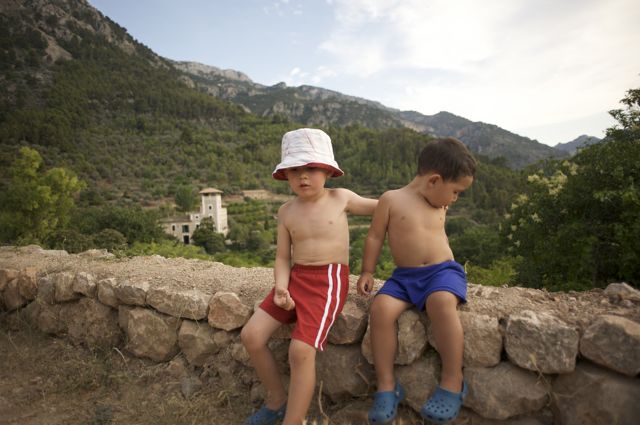
Sorry eggbop for the abrupt summer departure. Things were crazy at the end of the school year and we had a few sleepless nights before leaving for Spain. We get back for a few days only to turn around and leave to help prepare for Emo's wedding in Philadelphia! So... a few photos and hopefully one or two more check-ins until August. Hope everyone is faring well.
May 26, 2009
Enmeshment and the KA
One of the issues I’ve been exploring in my writing is enmeshment. The thing I trip on is that the idea is Western, with a base ideal that we are individuals first and foremost. Enmeshment is the problem between two individuals who can’t separate, hence “co-dependency”.
It’s an easy thing to see in the case of say, drug addicts, or enabling spouses, think Sid & Nancy, or women who can’t leave their abusive husbands. It’s more elusive in the long running genre of writing about daughters and their mothers, where it is often a battle of wills and daughters struggling to emancipate. It’s hard though to find this in Asian cultures – where the base ideal is the group, and the individual serves the family. The idea of teenage rebellion and departure from the family home at eighteen or twenty-one, esp. for a young woman, is foreign in Asian cultures where the idea of harmony is supremely valued, and ideally, a daughter is so cherished and valued there would be nothing for her to rebel against. (I know, this is an idealized example.)
As a KA I’ve seen a lot of conflict over this, where the Korean selves war against the Western parts of ourselves. KA families are torn apart by this, esp. by children who bitterly resent the Confucian authority of their parents ending in years of silence and anger. In Korea, this problem doesn’t exist in the same way. Anger of course is always a Korean issue, but the way KA’s, being born and raised here, internalize the Western values of being unique, independent naturally sparks wild against traditional Korean mores leading to a very real threat for KA’s who feel stifled, then oppressed, before in a sense fleeing for their lives.
May 25, 2009
A Wedding!
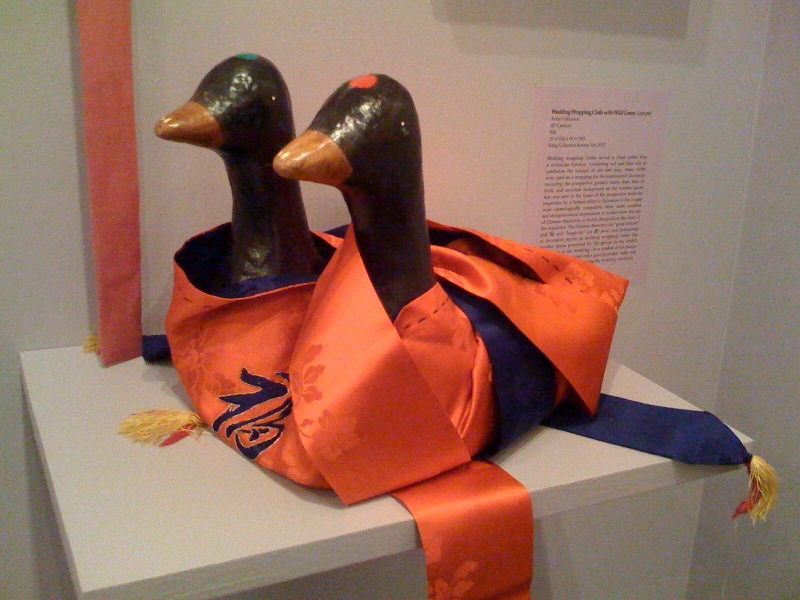
Sniffle. My little sister is getting married! This summer. If there are any crafty folk out there with Korean themed ideas, we'd love to hear 'em. She's chosen Korean ducks as a motif since her wedding will be lakeside. Nice, right? Clever bride.
April 23, 2009
I love you Hyung-ah
Tonight as I was putting the boys to yoh (Korean style bed) my two year old Gabriel says,
"Me love you Momma. Me love you Hyung-ah."
(Hyung-ah is the kid term for Older Brother)
Silence from Hyung, who is four years old.
I nudge him and say: "Tell him you love him!"
Hyung, really quickly: "I love you Momma and Gabriel."
Gabriel squeals. Then, "Me so happy Momma! Me so happy!"
Then as if he can't believe it: "I love you Mom! I love you Hyung-ah!"
Again, silence.
Gabriel, haltingly: "Tell me Hyung-ah!"
April 22, 2009
The Korean
On my list of things to do included adding a section for other blogs on my site. I'm not really a full member of the blogosphere but part-time (as if you couldn't tell by my postings!) but I do so enjoy the form.
In any case, one of the Grace's sent me this link yesterday: askakorean.blogspot.com After reading a few posts I seriously considered whether I should stop writing my own blog. This guy is an expert writer though for the uninitiated you should know his writing style is very aggressive (surprise, Koreans are aggressively opinionated?!) and voicy, but it does feel as though he is genuinely and deeply passionate about Korean and KA matters.
Another weird thing is that the writer is best blog friends with The Mexican which some of you might know, is my husband's handle. It almost feels like that pop sci-fi book where the main character finds out he is just a duplicate of the real him. And I'M the duplicate.
Anyhow.
Here's an excerpt from one of his funny posts titled:
Ask A Korean! News: Open Letter to Non-Asian People
Dear Black, Hispanic, and White People:
My name is the Korean, the host of a popular blog of Ask A Korean! The Korean keeps the blog in order to edify non-Koreans, and more generally non-Asians. That means you. The Korean had been thinking that he was making good progress, but visiting a region in America mostly populated by you people made the Korean realize that more direct approach is necessary. Therefore, the Korean presents the behavioral guide of interacting with Asian Americans.
- When you meet an Asian person in America, listen to the person's English. If it's fluent, assume the person is American. Do not say "Oh, your English is so great!" unless you want a punch in the face.
- Do not ask "Where are you from?" to an Asian person unless you are reasonably certain that s/he is outside of his/her American hometown. If the Asian answers, say, "Los Angeles", do not follow up with "where are you originally from?" or "where are your parents from?" Our precise ethnicity is none of your fucking business. Do we ever ask you whether you are from Dominican Republic, Ireland, or Ivory Coast?
- Do not holler any Asian celebrity name at any Asian person. The Korean is 6'1", and plays basketball frequently. If the Korean hears one more "Yao Ming!" from one of you, he will shove a basketball up your ass.
- Do not say "gonnichiwa" to an Asian person in America, unless you are absolutely positive that the Asian person is a Japanese tourist, or you are a host/hostess of a Japanese restaurant greeting an Asian customer. (Although if you are a host/hostess, the proper greeting would be iratsaimashe.) There are relatively few Japansese Americans in America compared to Chinese or Korean Americans, so you are most likely wrong; and if you had been reading the blog, Korean people really don't like being mistaken for a Japanese. Chinese people are not all that different either.
- On second thought, don't say any Asian phrase to any Asian person, unless you are at least conversational in the language. It's the 21st century, people. We are no longer impressed by your amazing ability to say "hello".
.... click the above link to continue reading.
April 17, 2009
Documentary Alert!
A tip from a blog friend emailed this today:
The Korea Society engages in the gender struggle with “Korean Women
Filmmakers: A Screening and Discussion with Yim Soon-Rye” on Wednesday
April 22 @ 6pm with one of the country's rare female directors
screening her documentary about women in Korea's film industry as well
as her short film.
The Korea Society
950 3rd Avenue
8th Floor
NY, NY 10022
(212) 759-7524
I am so there, a bag of ojing-oh (squid), old school style!
April 15, 2009
Tae Eun Yoo
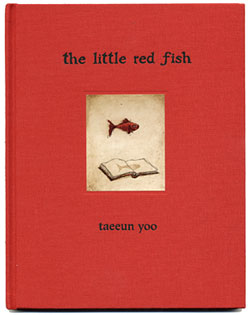
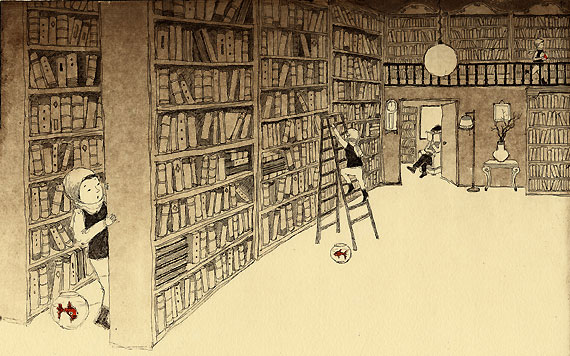
Found via Loobylu
Tae Eun Yoo also has a lovely etsy shop where you can buy her prints for $25 and a website with her portfolio!
March 18, 2009
Korean Dance Party
March 17, 2009
Park, Ho Sang
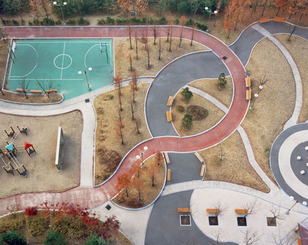
Most recent offering at 20x200 (I know, I'm such a tool but isn't this lovely!)...
(I don't know if you can tell but these are large format photos ... a rush of both detail and perspective at the same time, not to mention the colors! )
March 12, 2009
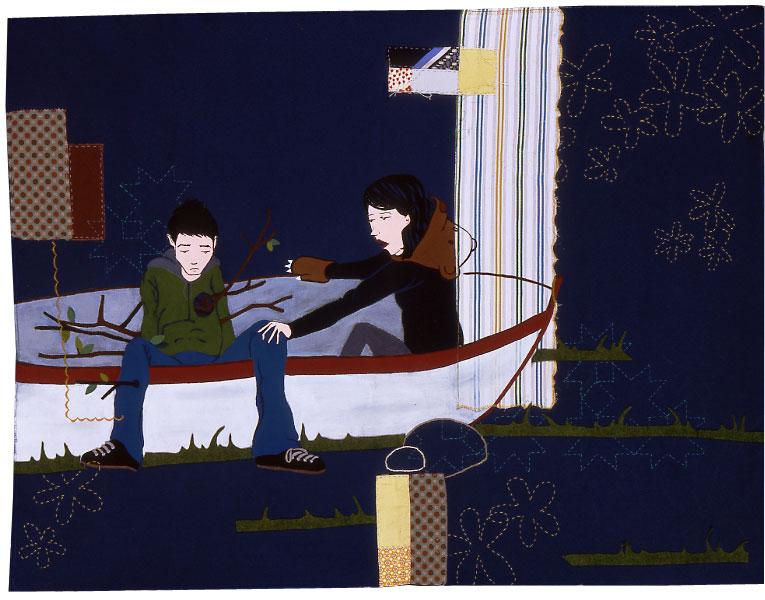
Saelee Oh
painted a mural on her dad's laundromat wall.
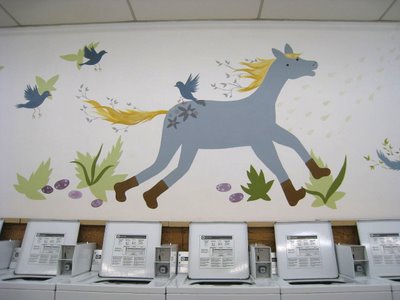
I've been a fan for years....
She's doing a group show March 18th-April 11th at:
Sloan Fine Art
128 Rivington Street
(corner of Norfolk)
New York, NY 10002
212.477.1140
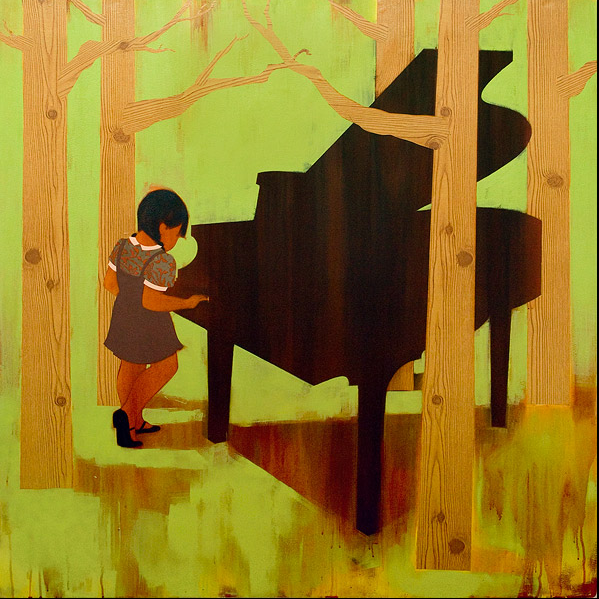
with Caroline Hwang another favorite...
and Seonna Hong whose work I am looking forward to seeing... !
March 9, 2009
Sci-Fi Us, Part II
Hence, David Chang.
I was sent this link ages ago about the superstar chef and owner of Momofuku Ko, Ssam Bar and now Bakery and Milk-Bar. The profile is well-done and captures much of of his immigrant upbringing and I was asked along with the link what I thought about the article, about David's conflicted genius and his compulsions towards religion. And I could not come up with an articulate response no matter how hard I tried.
What came out finally was the blog post from yesterday and how David Chang to me is a poster boy of our generation. It touches on his obsession with perfection, his compulsion toward religion, his conflict-ridden psyche as well as his ability to deal with the madness of the professional world of cooking. Also, it touches on something close to my heart, probably a subject most sensitive to me recently - KA men and their identities. But that's another blog post entirely.
Can't wait to hear what you think.
March 7, 2009
Sci-Fi Us
A social anthropologist once said of 1.5'ers that our experience here was the same as if our children were being raised by our grandparents. That the cultural mind-jump was profound, spanning from an agrarian post-war mindset to post-post modern in one generation. There was more said about this but this statement captured it all for me...
It captures my feeling that we are a generation of time travelers, of sci-fi characters able to feel at home in a tin-roofed home with an outhouse in Pusan, S. Korea and just as easily go to our jobs manning a register in the inner city while spending our days in academia. We can receive our local prayer lady without batting an eye, she'd come in and pray over us in tongues and things might even become more christian-shamanistic and your mom will be in the other room getting bruised black and blue (what IS the name of that practice?) and you will be in the kitchen preparing the watery instant coffee doused heavily with coffee-mate thinking of what movie you'd like to see, and if there was time to do a Starbuck's run for a latte.
I think this is the main reason Korean-American's have been able to assimilate so quickly and so successfully, the reason why there were recent studies done on the absurdly high percentage of Korean-American's who have made their way into the top tiers of entertainment, fashion, and art including the more traditional model-minority pursuits of law and medicine. We are a generation unfazed by the speed at which our times are progressing, we can twitter/game/Youtube as fast as we can help our mothers get out of the weird illegal DirectTV deal a Korean man approached her with (my mom in PA got somehow hooked into New York DirectTV but only got about eleven channels total) - how many times have we had to write letters, call companies on our parents behalf starting with "My mother doesn't speak English very well..."
It also explains why a K-A college girl from Los Angeles on vacation with her mom was able to whisper/mime to us one night by the camp fire in Yosemite that all the Korean's she knew were f***ed up. Pure and simple. And it was the reason, she said louder, that she knew she would not ultimately marry a Korean guy. She looked at her mom, a cheery energetic sort who loved driving all over the country on these mini vacations with her daughter and her mom said batted her eyes innocently and demanded to know, Why you look at mommy ?
If you think about it, the east-west factor alone is pretty astounding. At the same time we have to be both inter-dependent and individualistic; authority revering and authority critiquing; thinking of other's feelings first and thinking of how we feel first; obedient and unique; financially enmeshed with your parents and family, and expected to earn your own way. The list goes on and on and I for one think it's no small link to the high percentage of immigrant K-A's and mental illness. Because it is an impossible jump, bigger than a move across an ocean and half the planet- it's a move into an other way of understanding, opposite to all the meaning Koreans had ever known.
I think of all the times I witnessed a profound culture conflict, from something as little as a customer who'd misunderstood my parent's manner for rudeness to as big as legal events where a beloved family member tried to show respect to the law with silence and cooperation, and how the legal system exploited this to profound damage. And like all sci-fi characters, because we're a unique generation, caught halfway here to there, we're marked by what we see and can't share.
March 3, 2009
Korean Cinematography
Thanks Grace for the heads-up! We saw the episode last night and was rolling. They've got every shot down and Brett's Korean is pretty good.
March 3, 2009
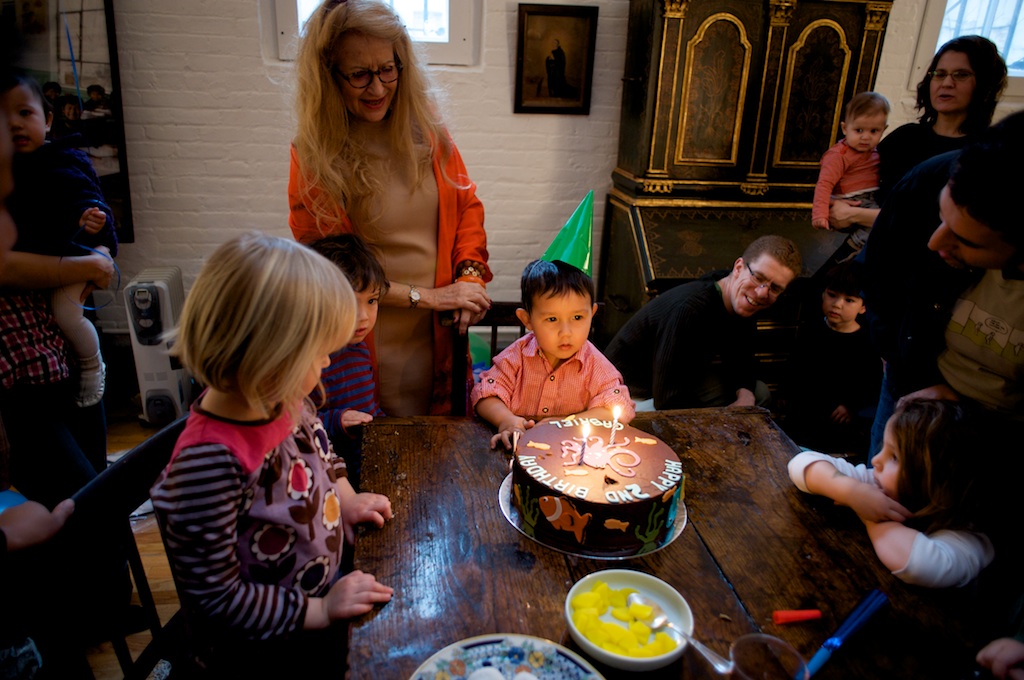
Happy Birthday Gabriel!
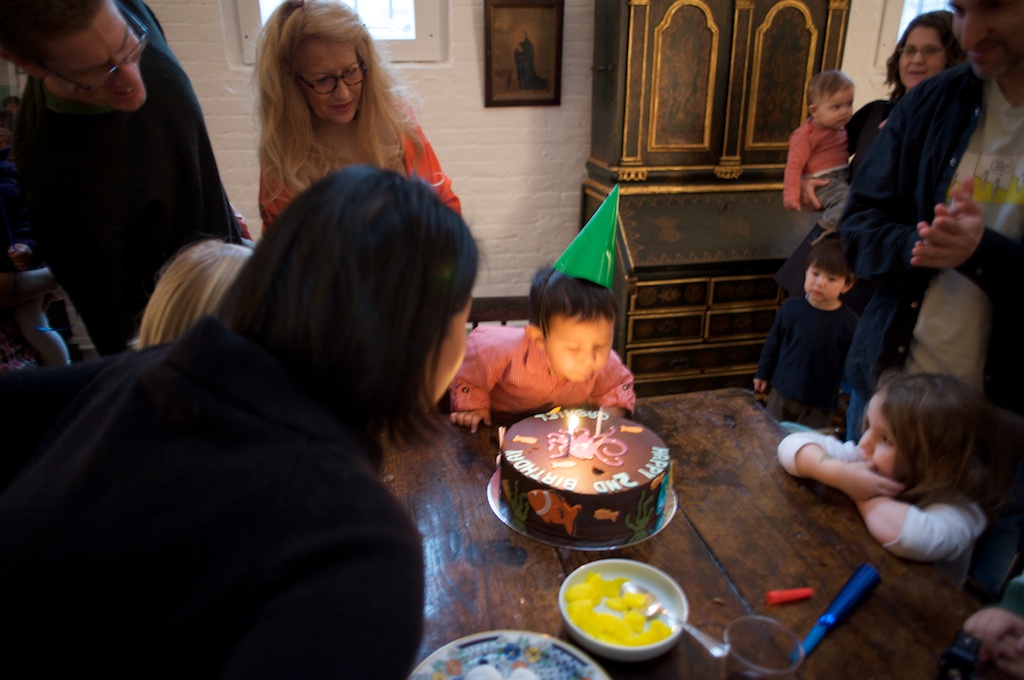
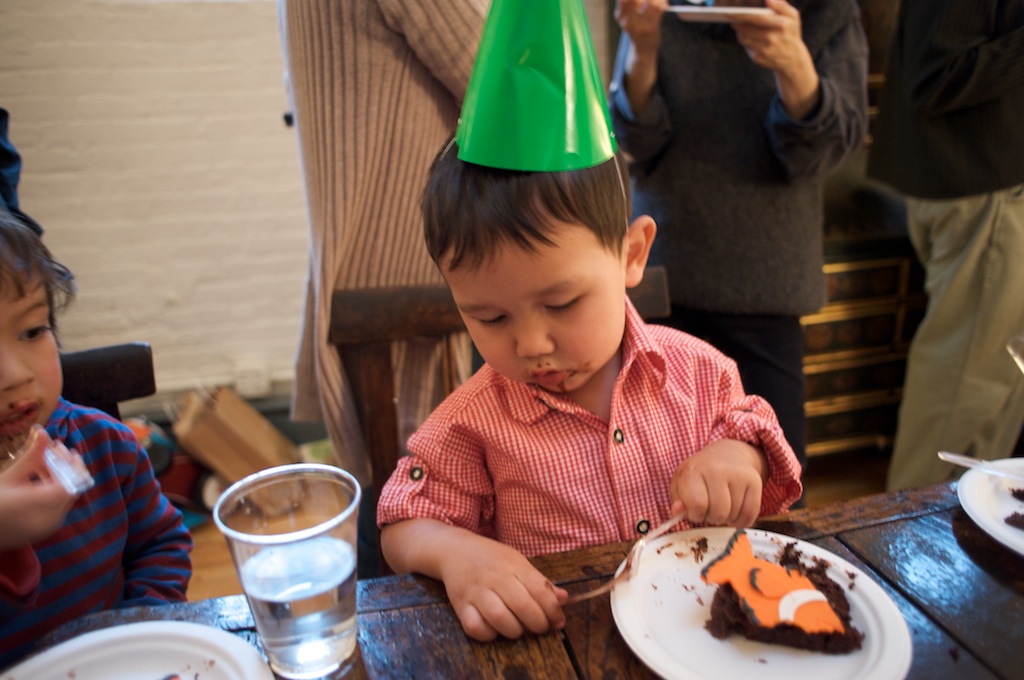
He turned two on Sunday. He was so excited he kept practicing 'blowing' all weekend and was only sad when he couldn't turn 'four' like his big brother. "No two! Yes four!" he shouted. He's still figuring out verbs.
Amazing things about my #2: He potty trained himself at 16 mos and was night trained within two months. (This was the first thing Raul and I'd blurt out in conversation for weeks after because we still couldn't wrap our minds around it) He eats kimchee, rinsed kid-style, almost every day. Loves drawing on himself. Has broken 2 DVD players, our toaster, our Birthday present to ourselves Bosch IPod Player, crayoned our TV screen, and popped off the 'enter' key on our portable. All this under constant supervision! He just gets around. (His brother broke not a single thing in all his four years.)
We can't imagine life without him...
February 26, 2009
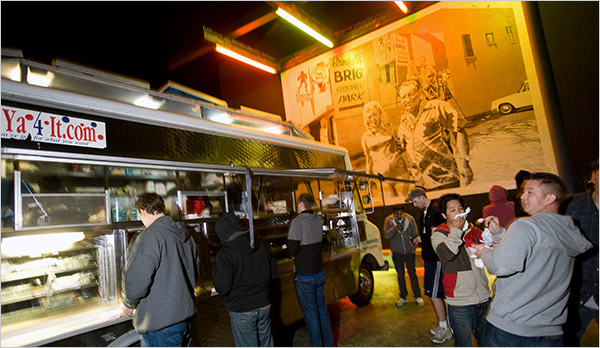
korean tacos
I got this lovely tip from a foodie friend recently ... (and thanks to flikr member sklathill!)
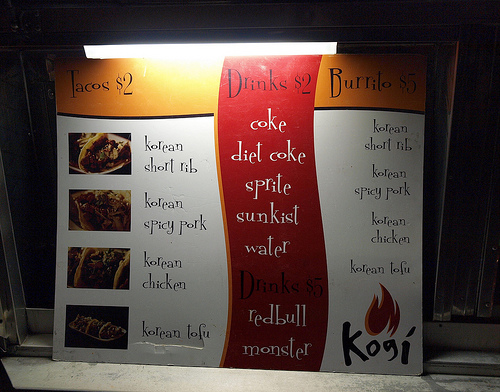
Kimchi + Tacos? I can't imagine a better way to represent my own marriage!
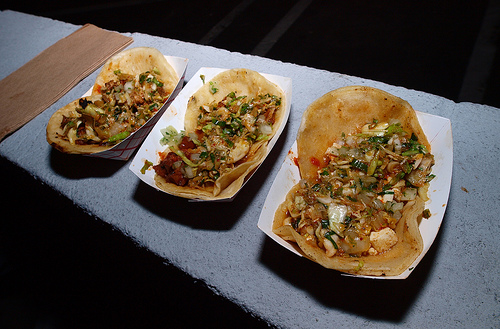
And here it is in today's NY Times... those guys are fast.
February 26, 2009
on Thursday
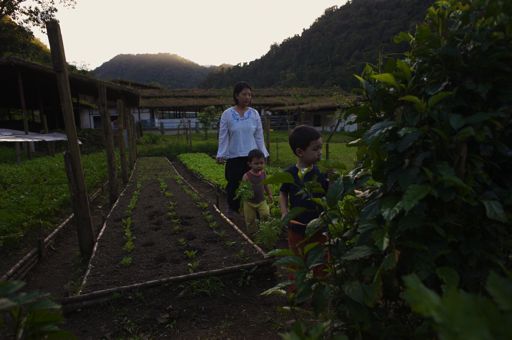
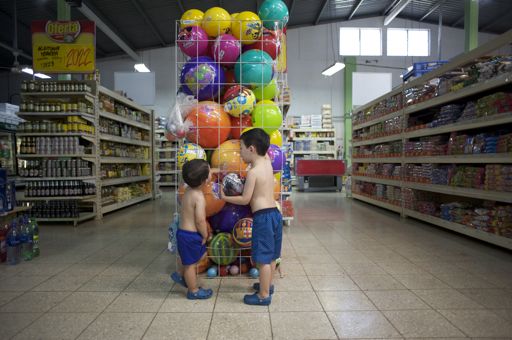
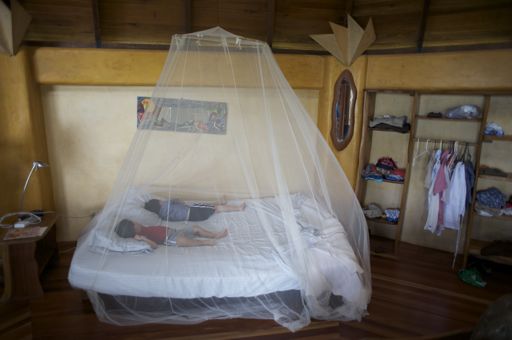
Back from Costa Rica without one sunburnt kid and we are still enjoying the first days of being back home. I always wonder on my trips back if I'll have that familiar feeling of being home, of loving the city and our Brooklyn nabe... or if one day I'll come back and feel nothing. I get this feeling of anticipation when we leave the airport and drive home, and my heart jumps a little when we turn onto Atlantic Avenue, just minutes from our place. Then the first few days back are like rediscovering the city you love, why you were drawn here in the first place and even the routine feels a little new.
Then, thud. Nine loads of laundry later you start coming back down and at some point you know you need to feed the kids a home cooked meal before they start turning into sandwiches and mac'n'cheese, and then the whole problem of schooling and where to live and how to live - thud.
New Yorkers will know what I'm talking about when I say that schooling is some serious business here and one of the top reasons people move away. My older one will go to Kindergarten in a year and if we want to guarantee him a spot at all we'll have to move to the zoned area for that public school. Private school is still an option but I expect if it was anything like the 2's application process we are pretty un-thrilled about it. We will know more about that in the fall but at this point we've toured over ten public schools and feel strong about several of them including the famed Park Slope, PS 321. But it would mean we would have to move. Again.
And then it wouldn't matter by the 5th grade because if we stayed in the public school system all the kids re-apply for middle school and it is the norm to end up commuting up to an hour away, for all of your kids to go to different schools in different areas, and then have to do the whole testing/application/interviewing/auditioning again for high school! No wonder the moms I've seen who've led the school tours all wear the same outfit: fitted worn black jeans, black tee, trekking shoes and and no joke, a money belt. They all have the air of being able to do anything at any moment which obviously comes with having put two or three children through school from pre-k to high school and thinking nothing of having one commute to the Upper West Side while another is bused to Coney Island.
Now why would anyone deal with this madness? Well many don't and so we have a ton of suburban neighborhoods pretty much founded by those who couldn't deal with this plus the other difficulties of urban living. And we've driven to some of those places and checked it out for ourselves. And at the end of the day we end up coming back having recounted all the reasons why we love living in the city - the lack of driving, the ethnic eating, the diversity, the creativity not to mention K-Town. We also realized that moving to a town with one school had drawbacks as well; we wouldn't have any choice first of all and we could be sure it would nowhere be as diverse as here. Our kids wouldn't be one of many mixed Korean kids but one of a few, and if the school had weak spots say in the arts or literature, we wouldn't have as many resources to draw on for support.
As a parent I've seen how hard it is to match a school to your child's particular needs and with the choices here parents always have options. Many, in fact. And having had key school experiences that were a poor fit for me I'm reluctant to give up the choices. So, back again to paragraph three. (they always say life is cyclical but i didn't imagine it this way)
Thud. Any thoughts?
February 21, 2009
Hi from Costa Rica...
February 12, 2009
Grace Park

We never quite got over the heartbreak of The Wire ending until we got into Battlestar Galactica. This show has got to be right up there with some of the best writing around, including what's out there in print and film and Pulitzer winning. While The Wire dazzled us with it's inventive novelistic structure and deeply nuanced characters, Battlestar takes up where Star Trek left off and does what sci-fi does best, creates an alternate futuristic world with it's own set of rules, and tells us stories about ourself in the cosmos. It is so friggin' good we will require our boys to watch it on DVD when they are old enough.
I also love that one of main characters is Korean and a cylon. Of course her name is Grace Park, just about the most iconic name for KA's... And to show you what a small world it is, it turns out she starred in a KA movie penned by a parent in our little Korean music group!
And on that random note I wanted to leave some eggbop apologies for being awol. I've been furiously working on a writing project and have also been happily inundated with Two Blue Cars stuff..... look out for our shirts in Uma Thurman's new movie Motherhood which opens later this year.
January 13, 2009
Children's Museum of the Arts
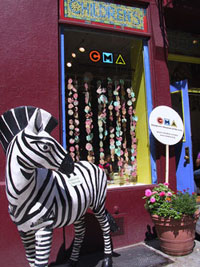
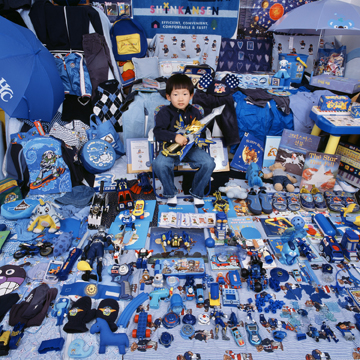
Jeong Mee Yoon's Pink & Blue project is currently on exhibition at CMA! It closes Feb. 8th so check it out!
January 10, 2009
Into the Woods... 2009
There’s a saying of sorts in conventional blogging wisdom that every blogger has one good year’s worth of writing in them and this has been on mind in the last days of 2008. I often think about the nature of blogging, what it’s become and how it plays a role artistically. I think people know now that blogs are a ‘new’ form of writing, a digital medium in the way the typewriter ushered in well, typing, though the digital medium also seems to have some comment on form. An early commenter on my blog lectured that my entries were much too long for my blog to become ‘successful,’ by which he was referring to the phenomena of blogs becoming people’s professions. Basically, successful blogs have readerships big enough to attract paying advertisers.
This was never my goal, thankfully, and for this tiny niche of blogs about Korean related things I think all three advertisers for this audience have found places on sites like Kimchi Mamas. For me the blog was a way to explore some ideas and questions, and to share hopefully things I loved about Korean culture. It was also a freeing writing exercise (I gave myself limits as in only allowing one edit, and creating a post in one or two sittings versus the indefinitely long periods of time it can take to write a short story etc.) and at times a daunting one. The anonymity of blogging I think is attractive to artists because you can shape how much or how little you are revealed. Blogging to me is mainly nonfiction and there is always a struggle in nonfiction between the real you and the narrator you...
Which brings me finally to my point. I’ve reached a turning point with this blog, one that points in a direction more dense with some of my queries, and more revelatory. I find myself at a point in this writing discovery where I have some harder questions about myself, Korean-American culture, my family and my friends. Hard to do this when those same friends and family read this blog or can easily find this information on the Internet which is after all a public forum. Not to mention that slippery boundary between respecting other people’s privacy and at the same time being able to tell your own story that inevitably involves those you love.
But I will try. And hopefully people will continue to share their thoughts because the one great thing about this blog has been when others have responded with their own stories, however sympathetic or different they might be.
January 3, 2009
Looking for one or two Olchengee
We're looking for folks interested in our Korean music group for kids, meeting in or near Boerum Hill. Times are being discussed so shoot me an email if you want more info. Meanwhile here are some of the songs we sing:
Olchengee Song (the Tadpole Song) - Picture both adults and kids on our feet acting out this song and you got a pretty good idea of our group.
Bear Family Song - One of our favorites!
Ands just because I spent too much time on YouTube and because Potty Training is still fresh on our minds:
(Okay so this is Japanese but the Korean Poop Song was too graphic even for me! Which incidentally my brother tells me is all the rage in Korea, a kid book about a Poop who transforms himself!)
January 2, 2009
Happy New Year!
Seh heh bok mani bad eh say yo! This year's seb eh was a record thirty minutes I think with grouped bowings and mass envelope giving. My sister's almost fiance has commented in the past that we were way too old to be receiving money for New Year's but we group jumped him and we haven't heard a peep since:)
Some one wonderful left a great comment about inviting guest bloggers and I'd love to explore this idea. I don't know exactly how it'd work but if anyone is interested maybe we can feel it out together? Just as long it has something to do with things Korean and is succinct'ish, maybe I can post something regularly! Just shoot me an email if you're interested and we'll take it from there.
Many blessings everyone and happy new year.
 to this site